

Mina comes alive as more than 1.6 million pilgrims enter Hajj’s key phase
Vast tent city prepares for one of Islam’s largest annual gatherings
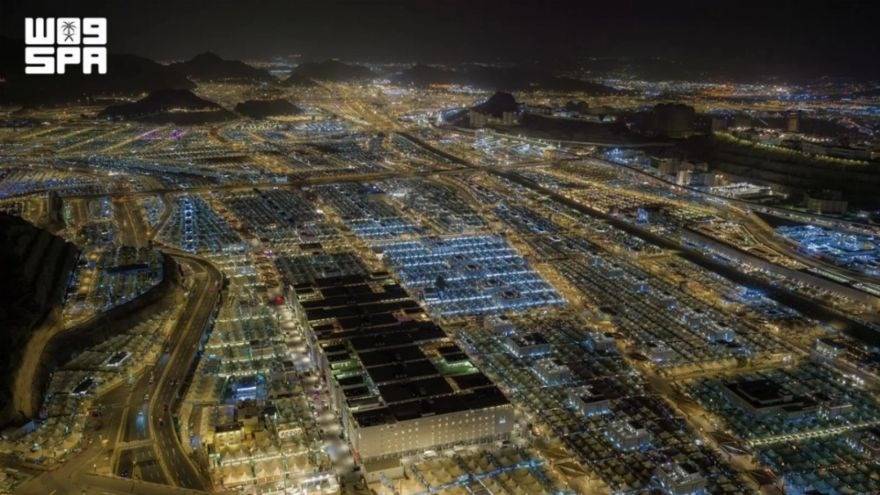
DUBAI/MECCA – More than 1.6 million pilgrims from across the world have descended upon Mina, marking the official beginning of Hajj and the start of one of the largest annual religious gatherings on Earth.
The Day of Tarwiyah, observed on the eighth day of Dhul Hijjah, brought extraordinary scenes of devotion as pilgrims in a state of Ihram streamed into the sprawling tent city, reciting the Talbiyah and preparing for the journey’s most significant stages.
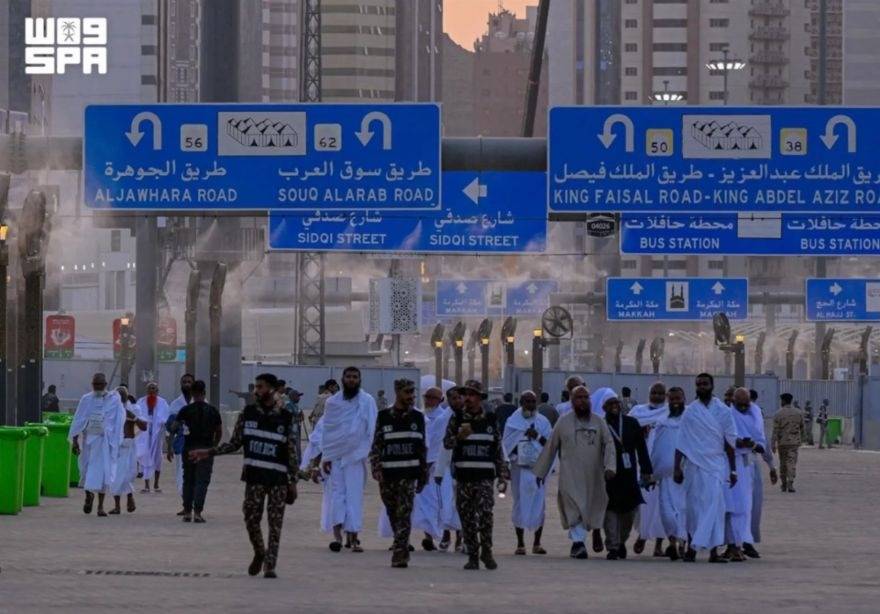
The sacred valley echoed with chants of “Labbaik Allahumma Labbaik” as pilgrims moved through highways, roads and designated pathways leading to Mina from Mecca. Dressed in white garments symbolising unity and humility, worshippers arrived by buses, trains and on foot, creating scenes of faith and movement that stretched across the holy sites.
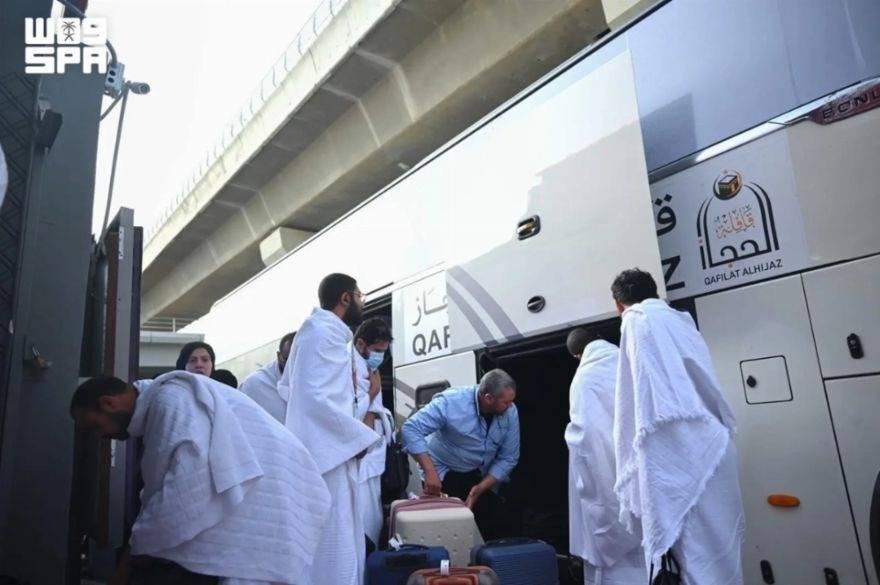
Saudi authorities confirmed that more than 1.5 million foreign pilgrims had arrived for Hajj this year, with figures reaching 1,518,153, representing an increase of approximately 0.8 percent compared with the previous year. Hundreds of thousands of domestic pilgrims have also joined the pilgrimage, taking the total gathering beyond 1.6 million people.
The annual pilgrimage, the fifth pillar of Islam, spans five to six days and draws Muslims from every continent. For many, the Day of Tarwiyah serves as a moment of spiritual reflection and preparation before reaching the most significant ritual of Hajj, the standing at Arafat.
Sacred valley
Situated around seven kilometres northeast of the Grand Mosque between Mecca and Muzdalifah, Mina lies within the Haram boundary and remains largely uninhabited throughout the year except during Hajj season.
Surrounded by mountains from the north and south, Mina transforms into one of the world's largest temporary cities during the annual pilgrimage. The site features an enormous tent city extending across approximately 2.5 million square metres, with infrastructure capable of accommodating more than 2.6 million pilgrims.
Its landscape also carries deep historical and religious significance. Mina borders the Jamarat area on one side and stretches toward Wadi Muhassir on the other. Islamic tradition links nearby areas with the historic Year of the Elephant, when Abraha's army is believed to have been prevented from reaching the Kaaba around 570 AD.
Throughout Sunday night and into Monday morning, roads approaching Mina witnessed a continuous movement of pilgrims. Many of those who had arrived in Mecca on Sunday first performed Tawaf Al-Qudum, the arrival circumambulation around the Kaaba, before continuing their journey toward Mina.
Following the Sunnah of Prophet Muhammad (peace be upon him), pilgrims will remain in Mina through the Day of Tarwiyah and spend the night there before departing for Arafat after sunrise on Tuesday.
Pilgrims are encouraged during their stay to perform Dhuhr, Asr, Maghrib, Isha and Fajr prayers, shortening the four-unit prayers while not combining them.
Hajj arrangements
The Saudi Ministry of Hajj and Umrah announced that extensive operational plans had been fully activated ahead of the movement into Mina.
Authorities described the transportation process as part of an integrated operational system designed to regulate pilgrim movement, improve crowd management and maintain efficient services throughout the pilgrimage.
The ministry said preparations included monitoring movement from accommodation facilities and hospitality centres toward designated camps. Field teams have also been deployed to provide guidance services and assist pilgrims in reaching assigned locations according to approved operational plans.
Officials stated that crowd movement into Mina had progressed smoothly, supported by traffic systems, aerial monitoring and coordinated management strategies.
Saudi Arabia has mobilised wide-ranging security, transportation, healthcare and logistical resources to support the annual pilgrimage. Coordination among ministries and agencies remains central to operational readiness.
The Council of Ministers recently reviewed preparations under the Pilgrim Experience Programme, aimed at strengthening integration between state institutions and improving service delivery across Mecca, Mina and Madinah.
Among this year's developments is the expansion of upgraded accommodation initiatives, including Rabiah Kidana and the Kidana Al-Khayf camp project.
Developed through collaboration involving Kidana Development Company, the Ministry of Hajj and Umrah and Ithraa Hospitality Holding Company, these projects have transformed previously underused spaces into fully serviced accommodation zones intended to improve comfort and increase pilgrim capacity.
Safety measures
Security operations have intensified throughout the holy sites as authorities seek to manage one of the world's largest crowd movements.
Special Forces for Security and Protection units have been deployed throughout Mina and surrounding locations to regulate pedestrian flow and monitor crowd density.
Adhering to Tafweej instructions ensures smooth movement between the Holy Sites and helps reduce overcrowding.… pic.twitter.com/8qf67cZuq9
— Ministry of Hajj and Umrah (@MoHU_En) May 25, 2026
Officials said security operations across Mecca's holy sites had been fully integrated to minimise congestion and maintain orderly movement.
The Ministry of Hajj and Umrah previously announced the completion of readiness plans involving more than 30,000 trained personnel operating digital systems and supporting field operations.
Authorities also trained more than 600 crowd-management supervisors and approximately 5,000 group leaders responsible for field coordination and digital management systems.
Multiple simulation exercises were carried out to test operational procedures and emergency responses.
Pilgrims have been advised to follow assigned schedules issued by Hajj operators and avoid unscheduled movement that may disrupt broader crowd flow systems.
Health alert
Alongside security and transportation plans, healthcare readiness remains on high alert, particularly as temperatures in Mecca and surrounding holy sites reached approximately 45C.
The Ministry of Health urged pilgrims to remain hydrated, use umbrellas and familiarise themselves with nearby medical facilities.
Saudi health authorities have mobilised extensive emergency resources. The Saudi Red Crescent Authority announced deployment of more than 3,000 ambulances and emergency vehicles, including motorcycles, bicycles, rapid response units, electric golf carts and medical scooters.
What’s the weather like today in Makkah, Madinah, and the Holy Sites? #Hajj1447AH pic.twitter.com/PyqZRscgJv
— Ministry of Hajj and Umrah (@MoHU_En) May 25, 2026
The operation also includes 11 air ambulances for emergency evacuations, 250 newly added ambulances, more than 500 emergency stations, over 7,000 personnel and more than 1,000 volunteers.
Healthcare innovation has also become increasingly visible during Hajj operations. The National Unified Procurement Company said drone-supported logistics systems had been introduced to transport medicines and medical supplies to field locations in as little as five to six minutes.
Medical readiness was tested early after specialists at King Abdullah Medical City successfully treated an Indian pilgrim who suffered a heart attack and cardiac arrest. Doctors used veno-arterial extracorporeal membrane oxygenation technology, an advanced heart and lung support system, to stabilise the patient.
The same medical centre also provided emergency treatment for Egyptian and Moroccan pilgrims facing severe eye conditions that threatened permanent loss of vision.